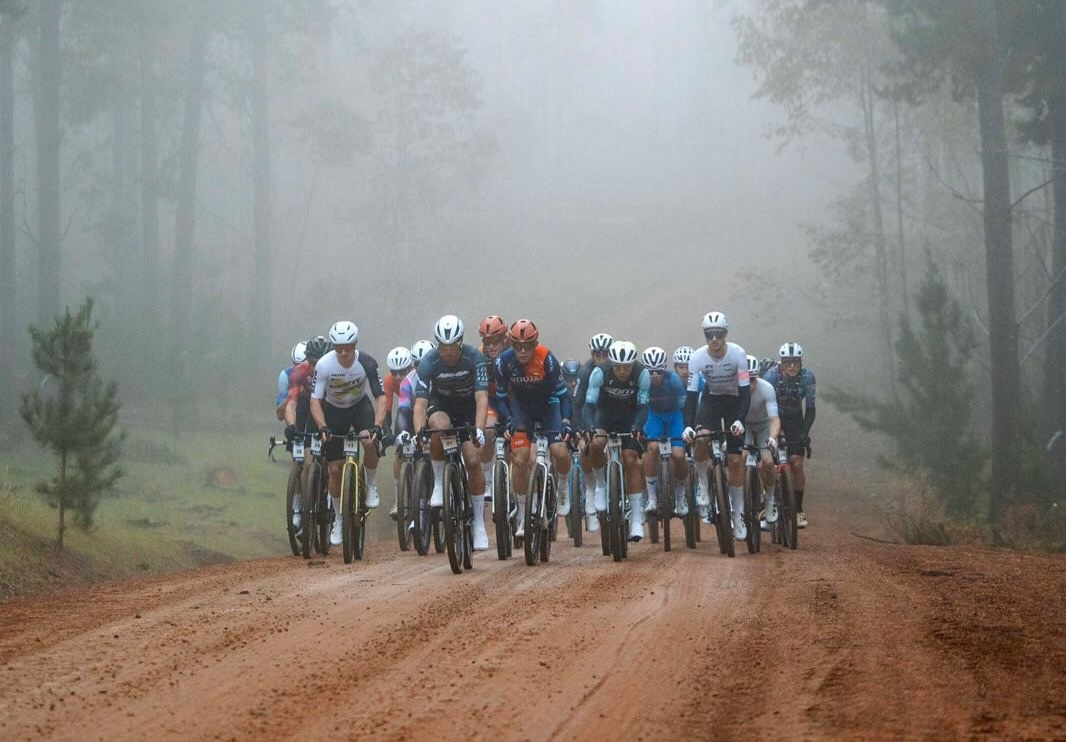
A 120–150 km gravel race is 4.5–7 hours of sustained sub-threshold pace, repeated surges, and fueling under duress — and the hard truth from the coaching literature is that you cannot build fitness in the last month. You can only add freshness. So this is not a training block, it's a sharpening block: weeks 1–2 do the only real work — race-specific fitness and a full dress rehearsal — and weeks 3–4 progressively unload while keeping intensity, so you arrive fresh. Built for an irregular schedule: some weeks 15 hours, some 4. When a week collapses, protect the long ride and one quality session, and let the filler go.
The assistant adapts these sessions to your event date, days and fitness — then drops the whole block on your calendar. One conversation, no blank calendar.
A month can't raise your FTP or transform your aerobic base — chasing them only leaves you tired on race day. What it CAN sharpen: race-specific pacing, a gut-trained fueling strategy, dialed equipment, and freshness — the most underrated gain available.
Don't chase a weekly hour target. Priority order every week: (1) the long ride, (2) the two quality sessions, (3) easy filler. If the week falls apart, do the long ride and one quality session — consistency of the key sessions beats total hours.
The governing rule of the last two weeks. Go completely easy and you arrive flat; keep the volume and you arrive tired. Short, sharp efforts plus plenty of rest is the answer. You'll likely feel worse before you feel fresh — that's fatigue clearing unevenly.
Often worth more minutes than fitness. 80–100 g carbs/hr from hour one, dual-source (glucose + fructose), every 20–30 min on an alarm. Train the gut on every long ride this month — front-load on easy sections, because hard and technical ground closes the window to eat.
- —The 4-week arc: Week 1 = race-specific build + biggest long ride (highest volume). Week 2 = sharpen + full dress rehearsal (moderate–high). Week 3 = taper begins, volume ~70% of week 1, intensity stays. Week 4 = race week, volume ~50%, freshness only.
- —Long-ride target: 3.5–4.5 h, ~60–70% of race distance (~80–100 km) on terrain resembling the course. Being able to cover ~60% of distance without needing days off afterward is a solid sign you'll finish well. You do not need to ride the full race distance in training.
- —Week 2's dress rehearsal is non-negotiable: exact race bike, tires, pressure, kit, bottles and food, plus the pre-race breakfast rehearsed 2–3 h before. Anything that fails should fail here, not in the race.
- —Pacing is where the race is decided: the first 30 min carry the highest average power of the day — a trap. For a 4.5–7 h effort, sustainable pace is ~70–80% FTP average with surges on climbs, and it should feel almost too easy in the first hour. Ride the terrain, not the group.
- —Race week: volume ~50% of week 1, sleep is the highest-leverage input, and nothing new — no new shoes, saddle, tires, gels or foods. If you feel sluggish Tue–Wed, that's normal taper feel; it usually lifts by Friday.
- —Fuel: 80–100 g carbs/hr from hour one, dual-source, every 20–30 min on an alarm; train the gut on every long ride. Pre-race: 2–3 h before, 1.5–2 g carbs/kg, low fiber and fat, familiar foods, with a small top-up 30 min before. If the stomach turns late, drop to 40–60 g/hr of liquid calories rather than stopping.
Compiled from endurance-coaching literature on tapering, race-specific preparation, pacing and fueling (2026). A general framework for a 120–150 km gravel race, not a personalized plan — adjust the targets to your own thresholds and schedule.