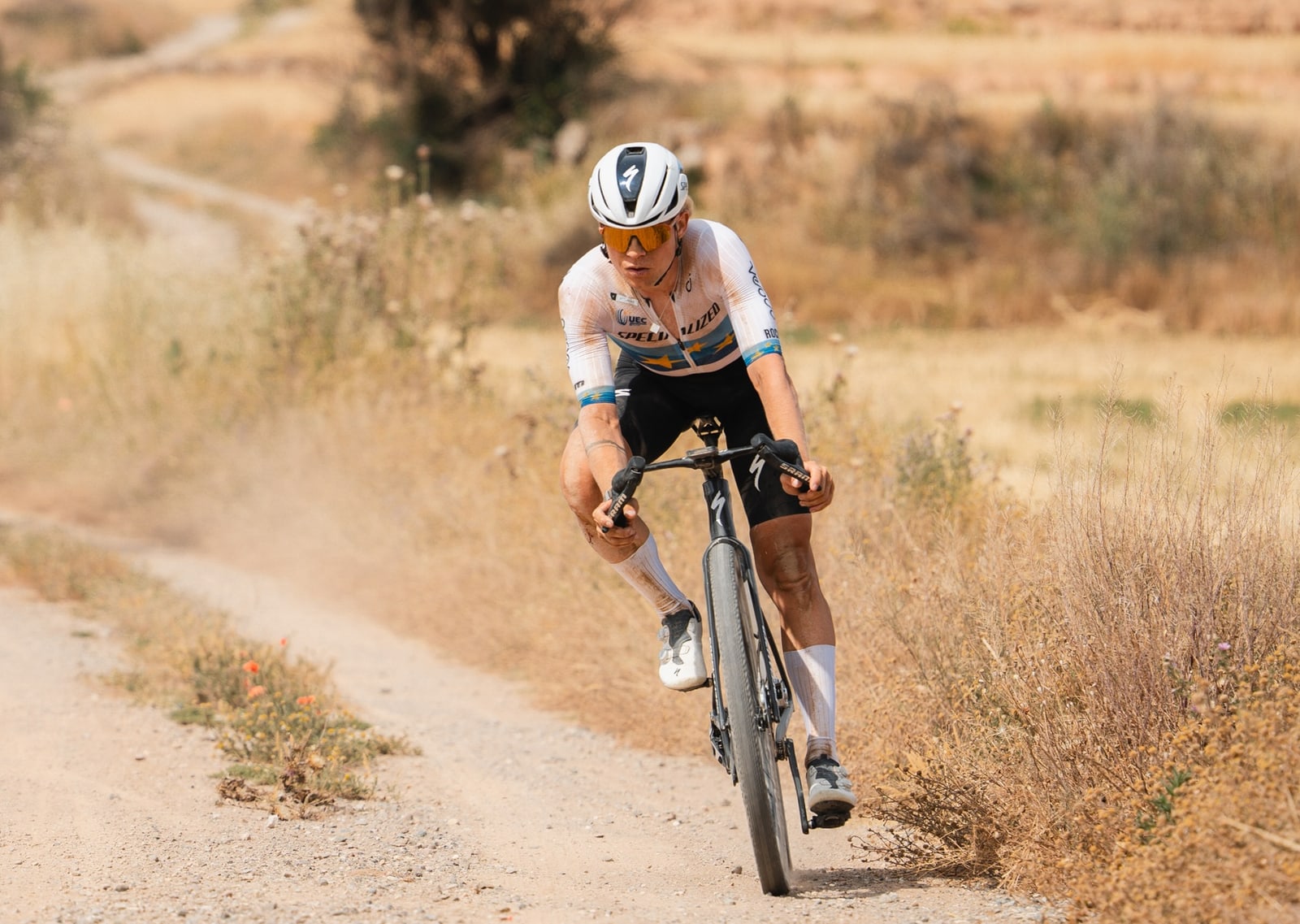
Mads Würtz Schmidt won both Traka 360 and Unbound 200 in 2026 — a former WorldTour pro who reinvented himself as the most durable rider in gravel. This is a reconstruction of how he trains: not on magic sessions, but on months of uninterrupted, high-quality work built around one obsession — holding power deep into hour eight, long after fresh FTP stops mattering.
The assistant adapts these sessions to your event date, days and fitness — then drops the whole block on your calendar. One conversation, no blank calendar.
Five to six months without a single missed training day. The body adapts when you never interrupt the process.
~20 h/week, but every non-rest day is structured work. Higher TSS on fewer hours — no junk miles.
Train to hold power when tired. Races average ~72% FTP, but pulls hit 88–93% — and he barely fades from hour 3 to hour 8.
A 6-week heat block instead of altitude, plus a controlled home environment — own calendar, own kitchen, own sleep. No travel wrecking blocks.
- —~80–90 h/month (~20 h/week). CTL peaks ~150 for the main goal, ~136 for a secondary goal 5 weeks later.
- —Periodization: off-season (Nov–Dec, easy, home) → base (Jan–Feb, Fat Max + lactate spikes) → build (Feb–Apr, sweet spot & threshold + race sims) → race-specific (4–6 weeks out, kitchen-sink sessions).
- —VO2 is never a standalone day — all of it is short bursts (15–60 s) embedded in longer sessions, mimicking race spikes on tired legs.
- —Durability test every 3 weeks: 7–7.5 h with threshold efforts at the 6.5 h and 7 h marks (~120–125 kJ/kg).
- —Heat block: first 6 weeks of the year, indoor, in winter kit — the stimulus is heat, not power. No altitude camps.
- —Fuel: 120–150 g carbs/hour on hard days; full carb-load the day before key sessions, not just races. Plus a daily 20-min activation routine (hips, glutes, core, TFL release) and one short gym session a week.
- —A representative week — amateurs can't match the hours, but the principle travels: never miss days, make every hard day count, and train to hold power when tired.
Compiled from publicly available interviews, race-data breakdowns and training analyses (2026). A reconstruction, not Mads' official training plan.